 World Stroke Organization
 Welcome to the WSA Podcast Series – where knowledge meets action in the fight against stroke.
Spasticity Unlocked: Expert Insights – Ep.1 Understanding Spasticity Beyond Basics
Part of the Spasticity Unlocked: Expert Insights for Clinical Practice series, this episode sets the stage for a deeper understanding of spasticity in clinical care. Join Prof. Octavio Pontes Neto and Dr. Gerard Francisco as they explore the fundamentals of spasticity, going beyond definitions to unpack its underlying causes and mechanisms. The discussion highlights the often-overlooked impact of spasticity on patients’ daily lives, function, and quality of life, emphasizing why early recognition and understanding are essential. Designed for healthcare professionals, this episode provides a strong clinical foundation to support better assessment, decision-making, and patient-centered care—preparing you for the practical insights covered in the rest of the series. Supported by Ipsen.

From Paper to Practice: Ep.3 – Addressing sex and gender differences stroke risk and management
The third episode of From Paper to Practice, a podcast series of the World Stroke Academy and the International Journal of Stroke with Dr. Ana Claudia de Souza and Dr. Cheryl Carcel discusses the recently published scientific statement, Addressing sex and gender differences in stroke risk and management: A scientific statement from the World Stroke Organization. How do biological sex and gender-related factors influence stroke risk, treatment, and outcomes? Why do women face unique risk factors—such as pregnancy-related conditions, menopause, and hormone therapy—and why are they often less likely to receive timely acute stroke treatment? In this episode, we explore the evidence behind these disparities and discuss what clinicians, researchers, and health systems can do to deliver more equitable stroke prevention and care worldwide. Reference: Carcel C, Sandset EC, Ali M, et al. Addressing sex and gender differences in stroke risk and management: A scientific statement from the World Stroke Organization. International Journal of Stroke. 2026;21(3):303-323. doi:10.1177/17474930251393009
From Paper to Practice: Ep.2 – The rising incidence of stroke in the young
The second episode of 𝐅𝐫𝐨𝐦 𝐏𝐚𝐩𝐞𝐫 𝐭𝐨 𝐏𝐫𝐚𝐜𝐭𝐢𝐜𝐞, a podcast series of the International Journal of Stroke and the World Stroke Academy, is here! Join Dr. Christine Tunkl and Dr. Linxin Li as they discuss the recently published IJS paper on '𝘛𝘩𝘦 𝘳𝘪𝘴𝘪𝘯𝘨 𝘪𝘯𝘤𝘪𝘥𝘦𝘯𝘤𝘦 𝘰𝘧 𝘴𝘵𝘳𝘰𝘬𝘦 𝘪𝘯 𝘵𝘩𝘦 𝘺𝘰𝘶𝘯𝘨: 𝘌𝘱𝘪𝘥𝘦𝘮𝘪𝘰𝘭𝘰𝘨𝘺, 𝘤𝘢𝘶𝘴𝘦𝘴 𝘢𝘯𝘥 𝘨𝘭𝘰𝘣𝘢𝘭 𝘪𝘮𝘱𝘢𝘤𝘵'. Why is stroke increasing in the young? Are traditional risk factors enough to explain it, or are emerging factors, such as stress, air pollution, and lifestyle changes, playing a role? We explore the latest evidence and what it means for prevention and public health. 𝐑𝐞𝐟𝐞𝐫𝐞𝐧𝐜𝐞: Nehme A, Li L. The rising incidence of stroke in the young: Epidemiology, causes and global impact. International Journal of Stroke. 2025;21(1):14-23. doi:10.1177/17474930251362583, https://lnkd.in/d6jjScNX
From Paper to Practice: Ep.1 – WSO Vascular Dementia Factsheet 2026
Welcome to the first episode of From Paper to Practice, a podcast series of the International Journal of Stroke and the World Stroke Academy. Join Dr. Ahmed Nasreldein and Dr. Vera Yuan Cai as they discuss the recently published WSO Vascular Dementia Factsheet 2026 and why vascular dementia is a critical - and often overlooked - clinical and public-health priority. Drawing on the latest evidence, this episode explores the true global burden of vascular dementia, its frequent coexistence with neurodegenerative diseases, and the urgent need for better recognition, standardized diagnosis, and stronger prevention strategies. Reference: Cai Y, Mok VCT, Markus HS. Vascular dementia: World Stroke Organization fact sheet 2026. International Journal of Stroke. 2026;0(0). doi:10.1177/17474930251404243
Accessible Stroke Training for all: Voices from the WGSP on the new Core Skills e-Learning Modules
In this episode, we spotlight an inspiring collaboration within the Wessex Global Stroke Partnership (WGSP), a long-standing initiative connecting stroke clinicians in the UK, Ghana, Zambia and The Gambia. Listeners hear directly from the teams behind the new Core Skills E-Learning Modules, developed to strengthen stroke care and make training accessible for clinicians and caregivers in low- and middle-income settings. Access the modules here: https://wgstrokemodules.org/
Meet the Trialist: Dr. Sampaio Silva on Trial designs and the Future of Stroke Prevention
In this exclusive interview, Dr. Gisele Sampaio Silva shares valuable insights on Factor XI inhibitors and their potential to transform stroke prevention. Interview conducted by Prof. Octavio Pontes Neto, Editor-in-Chief of the World Stroke Academy. This activity is supported by an unrestricted educational grant by Bayer AG. #WSC2025 #StrokePrevention #FactorXI #MeetTheTrialist #WSCtvStudio
International Journal of Stroke - Spotify
Listen hereInternational Journal of Stroke - Podbean
Listen here
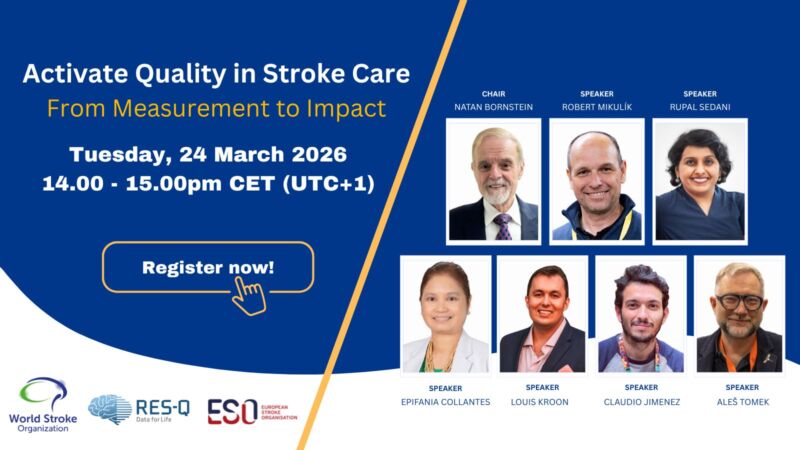
🌍 Activate Quality in Stroke Care: From Measurement to Impact
🔗 Register now for our global webinar: https://us06web.zoom.us/webinar/register/WN_Rzg6SEJrT06jl188ouyD6Q#/
@strokecareresq @ESOstroke
#RESQ #Stroke #MissionThrombectomy #StrokeCare #QualityOfCare #HealthcareQuality #StrokeRegistry
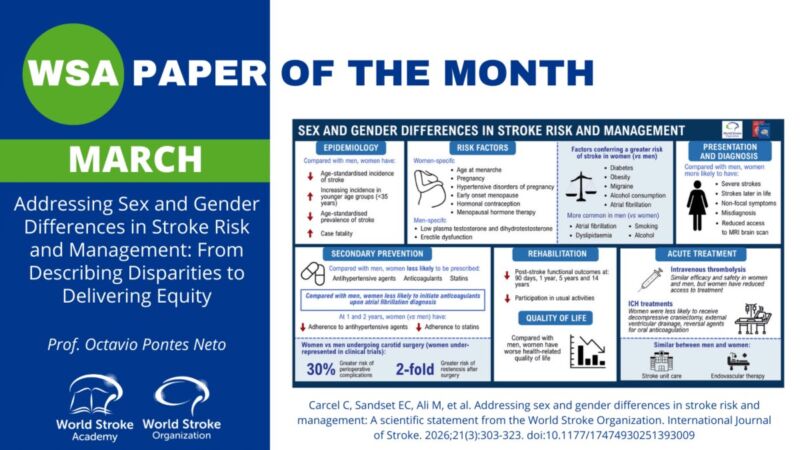
#PaperOfTheMonth
⚧️Sex and gender shape stroke risk, presentation, treatment, and outcomes
✍️This new scientific statement explains why we must move beyond describing #disparities to delivering #equitable stroke care
📄 Read more: https://www.world-stroke-academy.org/news/the-paper-of-the-month-march-5
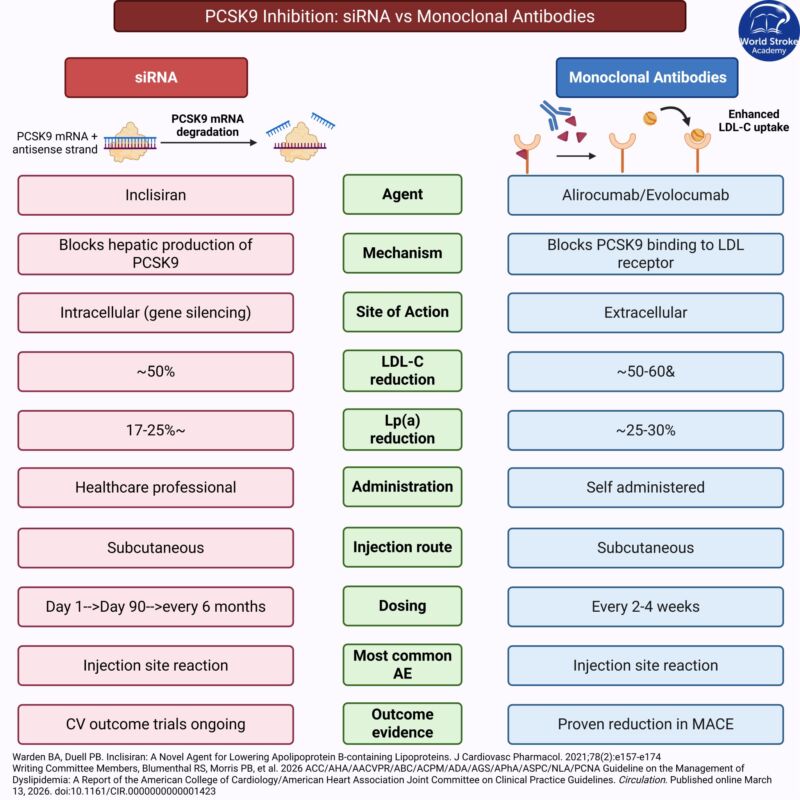
#MondayTip
New AHA dyslipidemia guides emphasizes earlier &➕ intensive LDL-C⬇️, often requiring non-statin therapy
PCSK9 options:
🧬Inclisiran (siRNA):↓PCSK9 production, dosing every 6m
💉Alirocumab/Evolocumab:✋circulating PCSK9
Both ↓LDL~50–60%, including in stroke patients
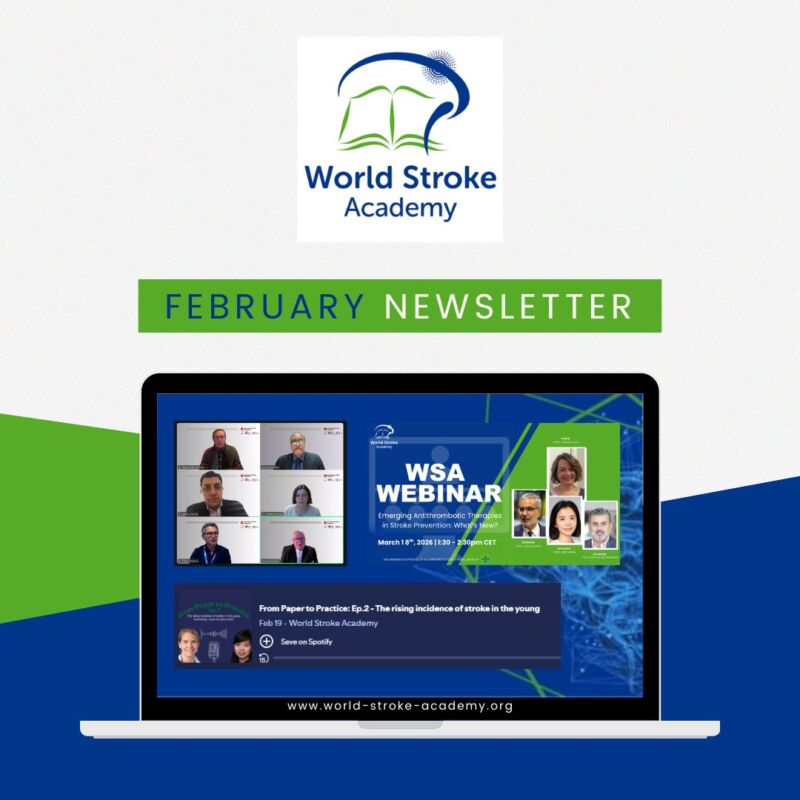
Missed what happened in February at @WorldStrokeEd? 👀
Catch up with our monthly newsletter!
🎓 Upcoming & past webinars
🎙️ New podcast episodes
📊 Fresh infographics
💡 Latest #MondayTips by @interneurona
🤓 Read it here:
https://www.world-stroke-academy.org/news/february-newsletter-3/
#StrokeEducation #StrokeCare