 World Stroke Organization
 Infographic on Stroke Spasticity Management: From Evidence to Every Day Practice
04 Mar 2026Infographic created in BioRender, G, R (2026), © World Stroke Organization, sponsored by Ipsen
Stroke Spasticity Management: From Evidence to Every Day Practice
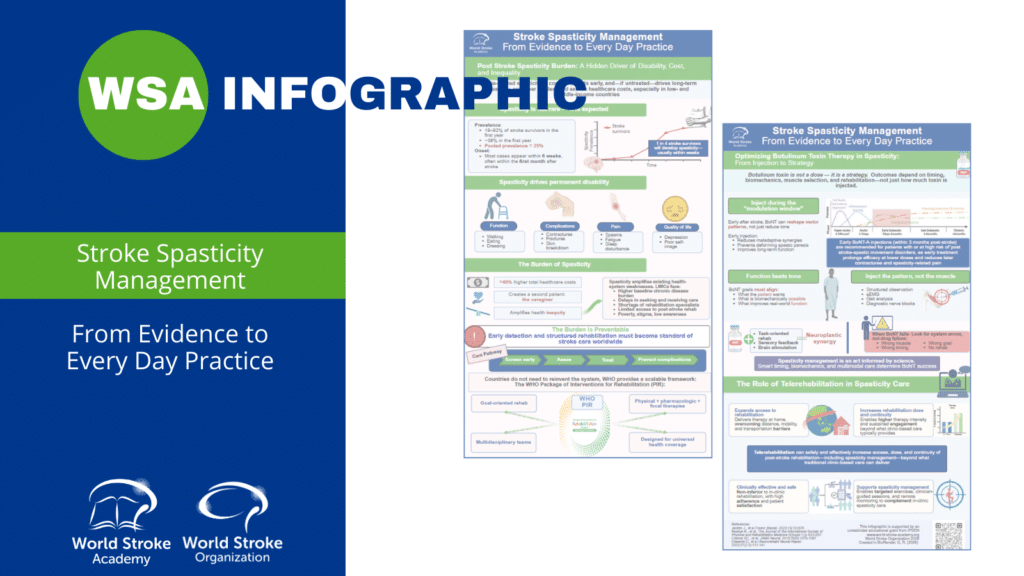
Infographic created in BioRender, G, R. (2026), © World Stroke Organization, sponsored by Ipsen
Introduction
Post-stroke spasticity is a common and often underrecognized complication that contributes significantly to long-term disability, caregiver burden, and healthcare costs worldwide. Emerging early after stroke—often within the first weeks—spasticity can interfere with function, amplify health inequities, and worsen outcomes if not addressed in a timely and structured manner.
To support healthcare professionals in translating evidence into everyday practice, the World Stroke Academy has developed an educational infographic titled “Stroke Spasticity Management: From Evidence to Everyday Practice.” The infographic provides a concise, visual overview of the burden of post-stroke spasticity, principles of early identification and intervention, and contemporary management strategies including botulinum toxin and telerehabilitation.
Key educational themes
- The prevalence, early onset, and global burden of post-stroke spasticity, including its impact on function, quality of life, caregivers, and healthcare systems
- The importance of early screening, structured rehabilitation pathways, and multidisciplinary care aligned with scalable frameworks such as the WHO Package of Interventions for Rehabilitation (PIR)
- Evidence-based spasticity management strategies, including physical, pharmacologic, and focal therapies, with emphasis on goal-oriented rehabilitation
- Optimization of botulinum toxin therapy, highlighting timing, muscle selection, biomechanics, functional goal alignment, and integration with rehabilitation
- The expanding role of telerehabilitation in improving access, increasing therapy dose and continuity, and supporting safe and effective spasticity care delivery
By presenting complex clinical and systems-level concepts in a clear and accessible format, the infographic aims to encourage early recognition, structured care pathways, and strategic intervention to reduce preventable disability. This educational resource is intended to complement existing clinical guidelines and rehabilitation frameworks, while reinforcing the importance of timely, multidisciplinary, and goal-driven spasticity management.
Educational grant disclosure
This infographic and accompanying educational content were supported by an unrestricted educational grant from Ipsen.
→ Access full infographic here: WSA Infographic on Stroke Spasticity Management
Related education
Stroke Spasticity Management: From Evidence to Everyday Practice